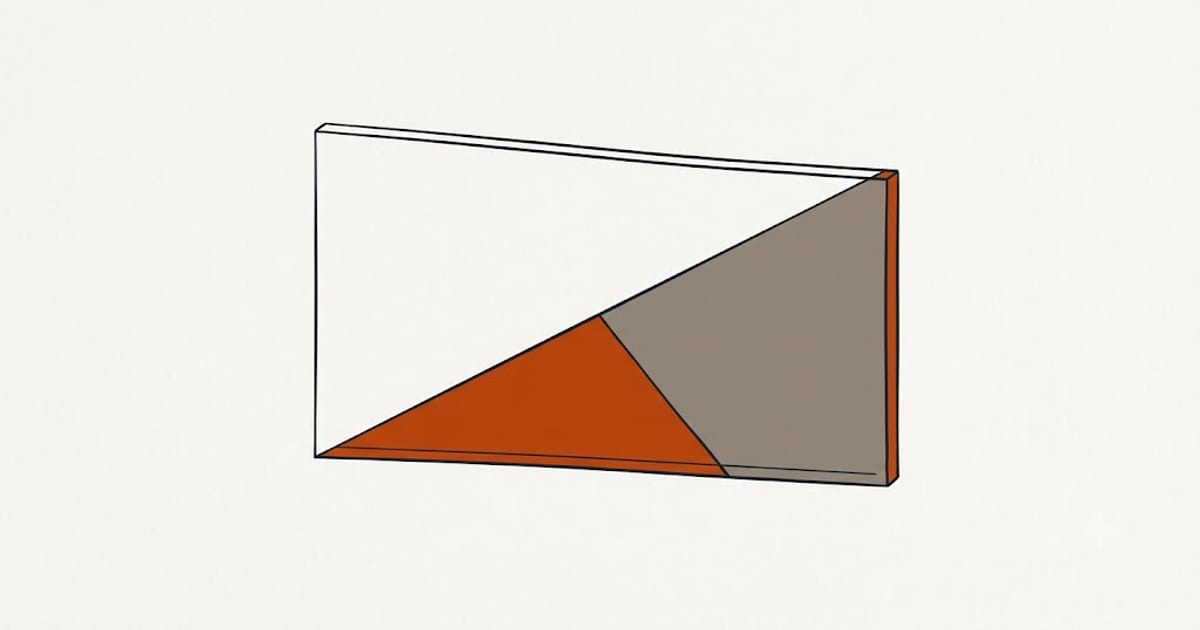
A $400,000 mortgage at 6.5% over 30 years costs $510,178 in interest — more than the amount borrowed.
| Rate | Total interest | Total paid |
|---|---|---|
| 5.0% | $373,023 | $773,023 |
| 5.5% | $417,616 | $817,616 |
| 6.0% | $463,353 | $863,353 |
| 6.5% | $510,178 | $910,178 |
| 7.0% | $558,036 | $958,036 |
| 7.5% | $606,869 | $1,006,869 |
| 8.0% | $656,621 | $1,056,621 |
At 5% the interest is 93% of the principal. At 8% it is 164%. The line is crossed just under 6%.
Why so much of it lands early
Interest is charged on the outstanding balance, which is at its largest at the beginning.
The first payment on $400,000 at 6.5%:
| Payment | $2,528.27 |
| Interest | $2,166.67 |
| Principal | $361.60 |
Fourteen percent of the first payment reduces the debt. After a full year of payments totalling $30,339, the balance has fallen by about $4,470.
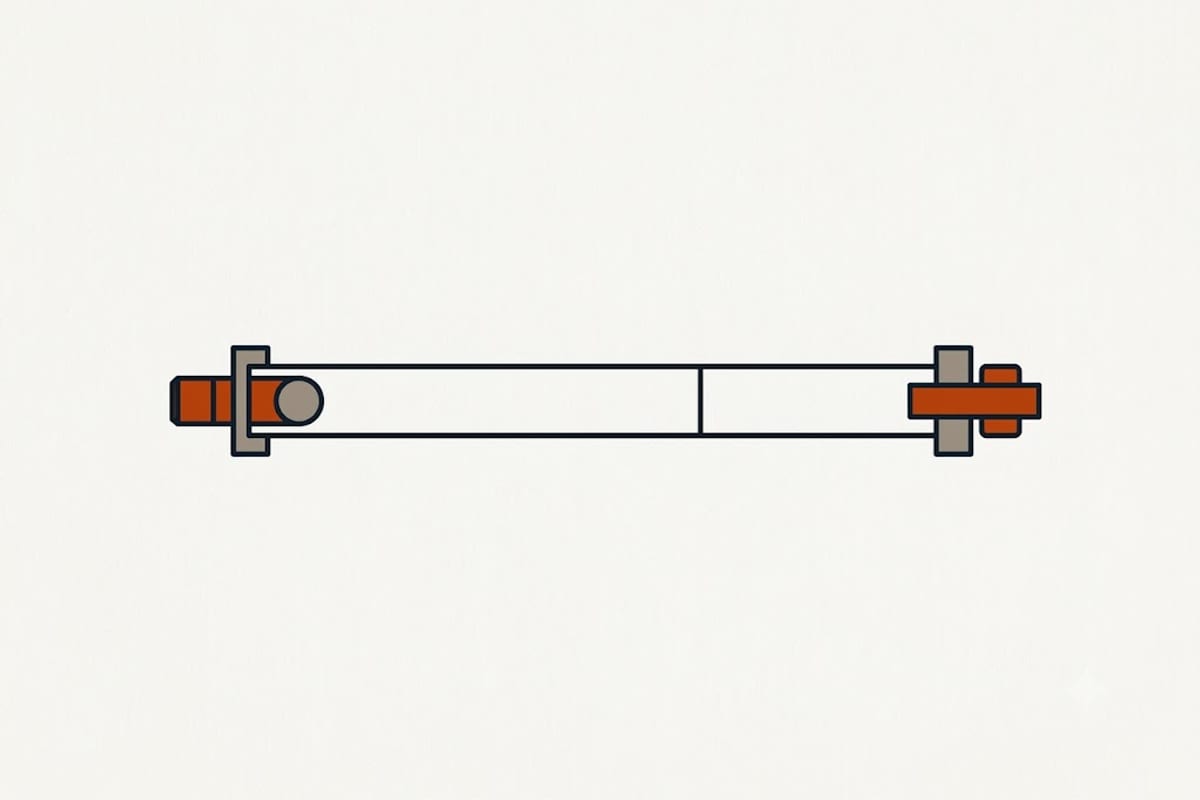
The crossover month — where principal first exceeds interest within a single payment — arrives around year 18 at this rate. Higher rates push it later; lower rates pull it earlier. On a 15-year loan it arrives in the first year.
What an extra payment removes
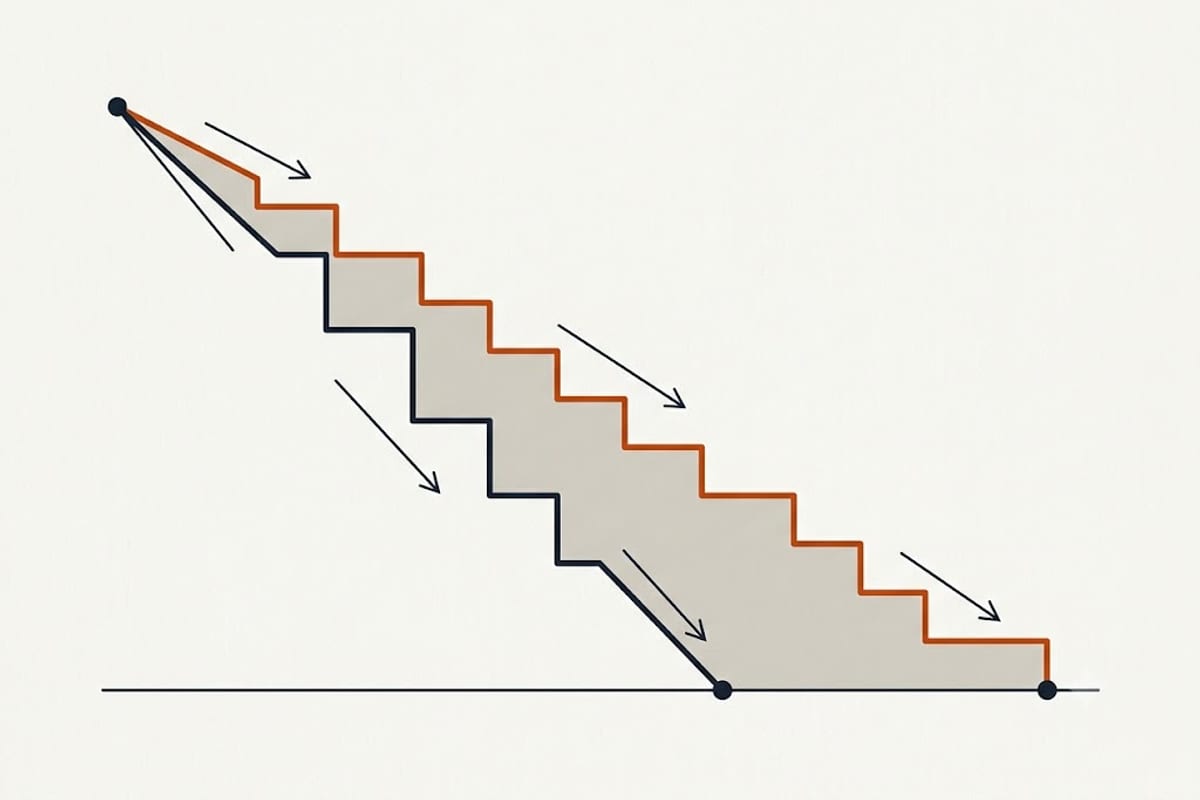
Because the schedule is front-loaded, an extra payment made early removes interest from every remaining month. The effect is large and it is not linear:
| Extra per month | Interest paid | Loan paid off in |
|---|---|---|
| $0 | $510,178 | 30 yr 0 mo |
| $100 | $446,261 | 26 yr 10 mo |
| $200 | $398,286 | 24 yr 5 mo |
| $500 | $304,621 | 19 yr 5 mo |
$100 a month removes $63,917 of interest and three years two months of payments. Total extra paid over those 26 years: about $32,000.
Two conditions attached:
It must be applied to principal. Otherwise many servicers treat extra money as a prepayment of the next scheduled payment, which does almost nothing. This usually needs to be specified, in writing, each time or as a standing instruction.
Early beats large. The same $12,000 paid in year 2 saves substantially more than in year 15, because it removes interest from more remaining months.
The biweekly trick, explained honestly
Paying half the monthly amount every two weeks produces twenty-six half-payments a year, which is thirteen full payments rather than twelve. On a $400,000 loan at 6.5% that extra payment shortens the term by roughly five years and removes about $110,000 of interest.
There is nothing magical in the fortnightly rhythm. The saving comes entirely from the thirteenth payment, and dividing the annual payment by twelve and adding it to each month produces almost exactly the same result.
Worth checking before signing up for a biweekly programme: some servicers hold each half-payment until the second arrives and only then apply a full one, which removes the benefit while charging a fee for it. A standing extra transfer to principal costs nothing and cannot be mishandled.
What the tax deduction does and does not do
Mortgage interest is deductible for those who itemise, which since the standard deduction rose is a minority of filers. Where it applies, it reduces taxable income rather than tax owed: $20,000 of interest at a 22% marginal rate returns about $4,400, not $20,000.
Two consequences follow. First, "the interest is deductible" is not a reason to carry more of it — spending a dollar to recover twenty-two cents is still spending seventy-eight. Second, the benefit is largest in the early years, when interest is highest, and shrinks steadily thereafter, which means the after-tax cost of the loan rises over its life even at a fixed rate.
Refinancing arithmetic
The rule of thumb — refinance when the rate drops a point — ignores the fact that a refinance restarts the amortisation schedule at the front, where interest is densest.
Someone twelve years into a 30-year loan who refinances into a new 30-year loan at a lower rate can pay more total interest despite the lower rate, because they have reset to month one of a new front-loaded schedule.
The honest comparison is total remaining interest on the current loan against total interest on the new one, including closing costs, over the same end date. Not monthly payment against monthly payment.
What this changes about the term choice
A 15-year loan at 6.5% pays $227,197 in interest against $510,178 over 30 — less than half, for $956 more a month.
The same front-loading applies to car loans, where the shorter term compresses the effect but does not remove it, and it is one reason lenders cap the payment rather than the total.