$693 a month on a $35,000 car loan at 7% over 60 months.
| Rate | 36 mo | 48 mo | 60 mo | 72 mo | 84 mo |
|---|---|---|---|---|---|
| 5% | $1,049 | $806 | $660 | $564 | $495 |
| 7% | $1,081 | $838 | $693 | $597 | $528 |
| 9% | $1,113 | $871 | $727 | $631 | $563 |
| 11% | $1,146 | $904 | $761 | $666 | $598 |
The term costs more than the rate
At 7%, look at what each row of the term axis actually costs in total interest:
| Term | Monthly | Total interest |
|---|---|---|
| 36 months | $1,081 | $3,905 |
| 60 months | $693 | $6,583 |
| 72 months | $597 | $7,963 |
| 84 months | $528 | $9,372 |
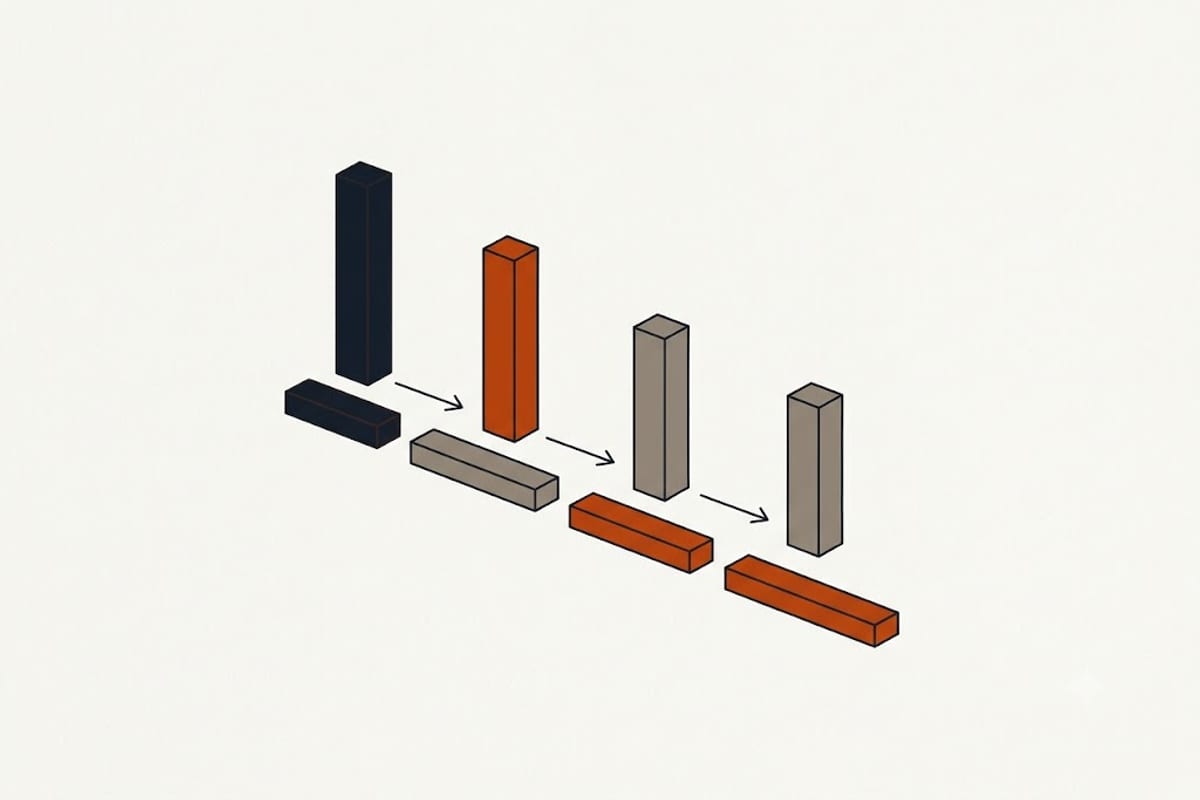
Going from 60 to 84 months drops the payment by $165 and adds $2,789 in interest. Going from 7% to 5% at 60 months drops it by $33 and saves $1,953.
The payment is more sensitive to the term. The total cost is more sensitive to the rate. Dealers negotiate the first number because it is the one a buyer feels every month.
Why long terms are worse than the interest suggests
A car loses value on its own schedule, roughly 20% in the first year and 15% a year after that. A long loan pays down principal slowly at the start. The two curves cross.
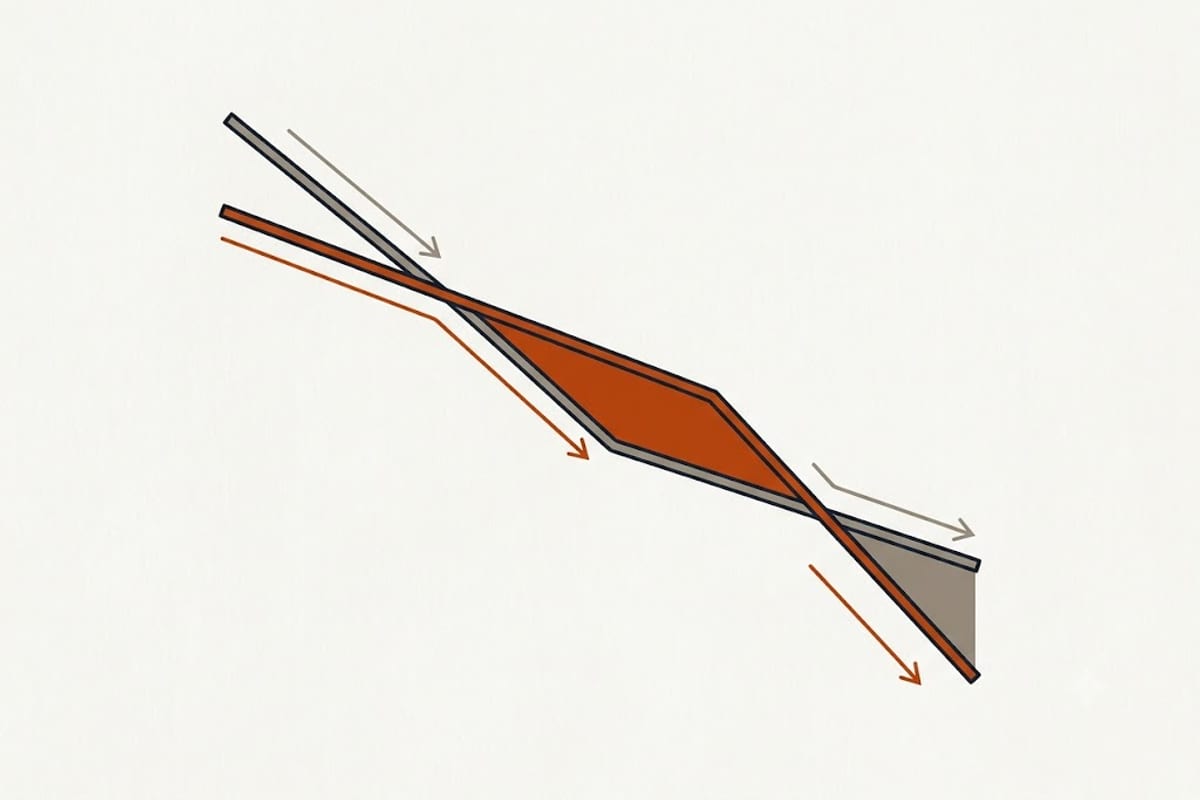
On an 84-month loan with little money down, the balance stays above the car's value for roughly four years. During that window:
- Selling or trading means writing a cheque to close the loan.
- A total loss pays out the car's value, not the balance, and the difference is yours. Gap insurance exists to cover exactly this window.
- Rolling the shortfall into the next car loan starts the next one already underwater.
Being underwater is not a fee. It is a restriction on your options, and it lasts as long as it lasts.
What the payment is made of
The advertised price is not the amount financed:
| Line | Typical on a $35,000 car |
|---|---|
| Vehicle price | $35,000 |
| Sales tax | $0–$3,000 depending on state |
| Title, registration, doc fees | $200–$900 |
| Less: down payment | −$3,500 (10%) |
| Less: trade-in equity | varies |
| Financed | $31,700–$35,400 |
Tax and fees are commonly rolled in, which is why the financed amount often exceeds the price of the car even with money down. That is also why a "zero down" deal on a taxed purchase starts underwater on day one.
The formula, same as a mortgage
M = P × r(1+r)^n / ((1+r)^n − 1)
    r = annual rate ÷ 12      n = months
Identical mathematics to a 30-year mortgage. What differs is the term — and the fact that a house does not usually lose a fifth of its value in year one.
Two practical rules that survive contact with a dealership
Negotiate the price, then the trade, then the financing. Separately, in that order. Bundled into a monthly payment, a worse price hides inside a longer term and neither is visible.
Bring your own rate. A pre-approval from a bank or credit union is a number the dealer has to beat rather than set. Dealer financing is often competitive; it is easier to tell when you have something to compare it against.
The interest arithmetic runs the same way on both sides of the term: see where the money goes over thirty years, and note that a car payment counts against the debt-to-income ratio that sets your mortgage ceiling.